鱼游处 心亦安
Where Fish Swim, the Heart Finds Peace
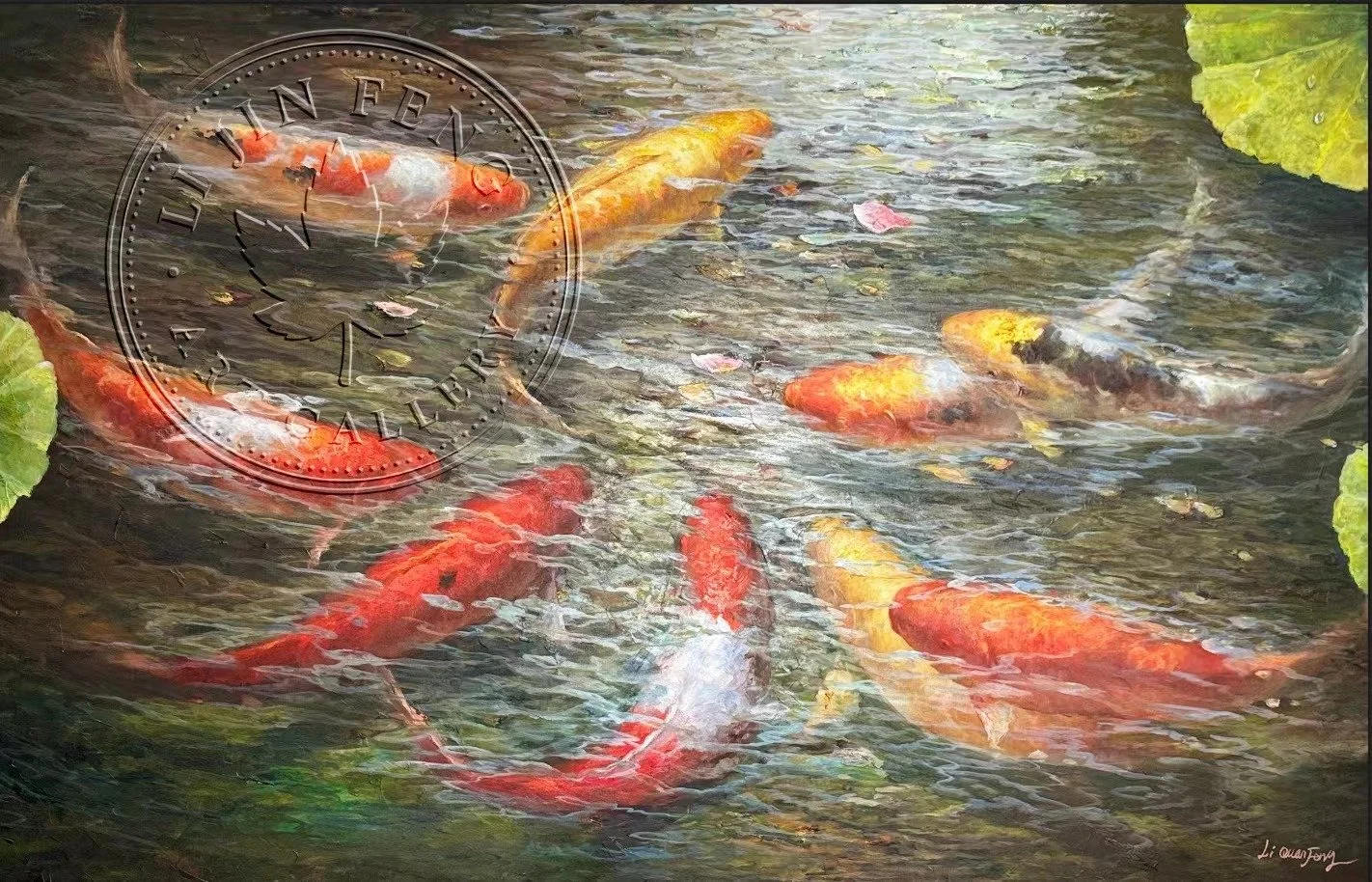
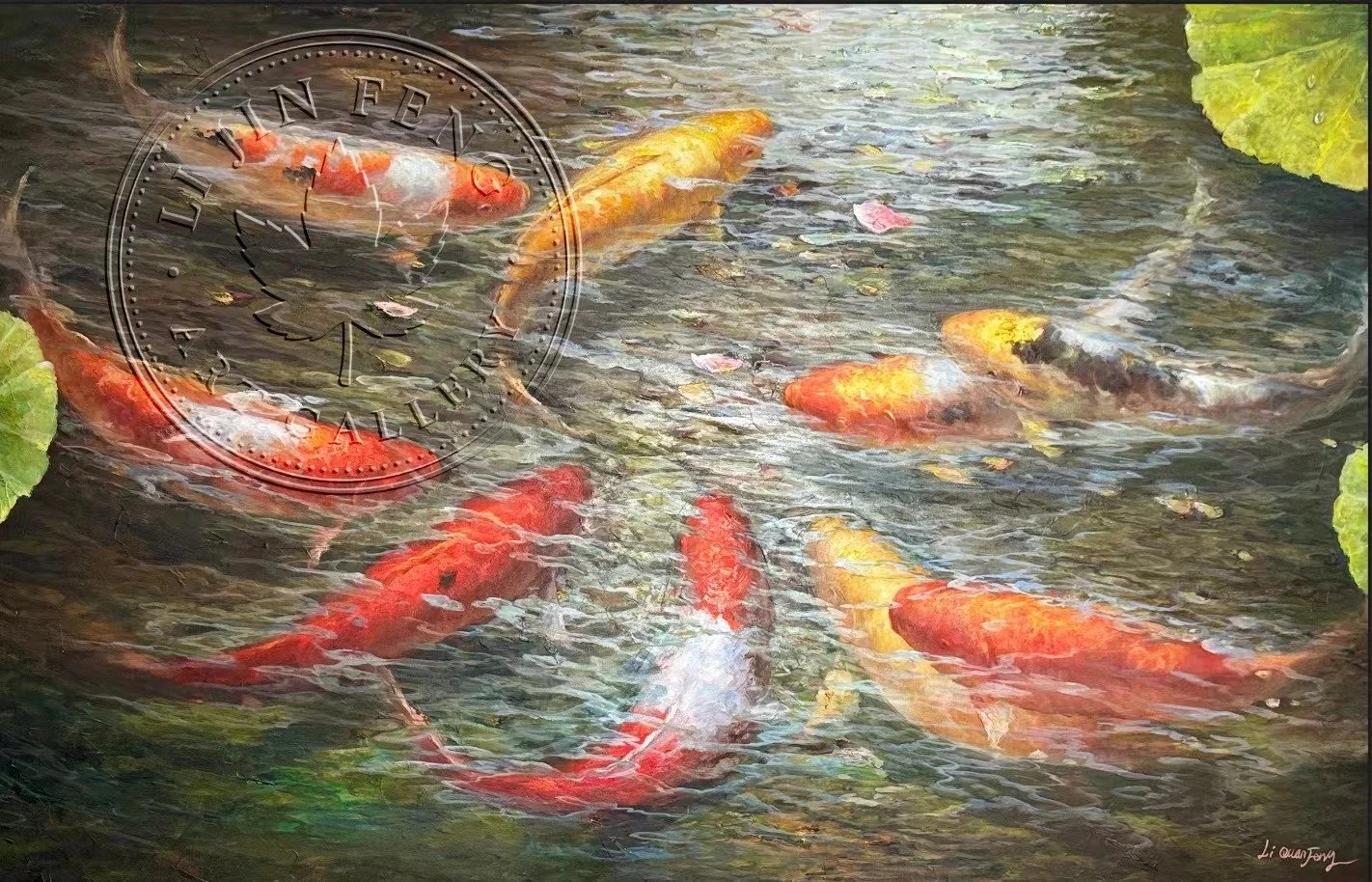
檐角的风掠过白墙,携着微凉的水汽,把一幅由油彩铺陈的水世界送至眼前。画布之上,锦鲤游弋,搅碎了一池光影,仿佛将江南春水的清润与灵动,都悄然揉进了层层叠叠的色彩里。水不再只是背景,而成为流动的空间,承载着时间与呼吸。
荷叶铺展其间,翠色如团扇半掩,遮住水底幽深的绿意。几尾红鲤曳着绸缎般的尾鳍,在水纹中缓缓游动,红色于澄澈之中漾开,层层晕染,恍若有人不慎打翻胭脂盒,将春色洒入清溪。金的、白的、杂色的锦鲤或停或游,在光影交错处,把水的褶皱织成一匹流动的锦缎,静与动在同一时刻并存。
画中的水似乎并不喧哗。鱼群游走其间,没有惊惶,也不显匆忙,只在这方有限的天地里悠然往复。它们轻轻摆尾,仿佛把水的温柔细细咀嚼,又慢慢吐纳成岁月的闲章。风从画外经过,水波随之轻颤,仿佛能听见水的低语,和鱼鳍拨水时细微而从容的声响。
在中国的传统意象中,锦鲤常被视为招财纳福、吉庆丰余的象征,“年年有余”的祈愿,也常随鱼影一同入画。这满池的灵动,确实凝聚着世人对富足与安稳的向往。然而在这幅作品里,锦鲤并未被赋予功利的寓意,它们更像是在享受水的拥抱,与光影嬉戏,将生命的自在与松弛,坦然呈现于画布之上。
正如画家笔下的荷塘月色,是独处时的清欢;这幅画中的锦鲤,则是一种群游的喜乐。它们不懂风水命理,也不知人间计较,只懂在水中舒展身子,把每一次摆尾都化作对自由的回应。而画外之人静静凝视,心绪也随之放缓,那些原本纷扰的俗世声响,竟在这一池鱼乐之中,悄然退为远景。
日光缓缓移过画布,鱼鳞的光泽忽明忽暗,水色随之生息流转。此刻,画里与画外似乎失去了界限——分不清究竟是谁在观鱼,又是谁正化身为水中的一尾游鱼。只觉这一方油彩构筑的天地,藏着水的灵秀、鱼的欢愉,也映照出人心深处,对安稳、从容与喜乐最本真的向往。
画作介绍
Introduction
The wind skimming the eaves brushes against the white walls, carrying a hint of cool moisture, and presents a watery world rendered in oil on the canvas. Upon it, koi swim gracefully, breaking up the reflections and light, as if the gentle clarity and vitality of Jiangnan’s spring waters have quietly blended into the layers of color. The water is no longer merely a backdrop—it becomes a flowing space, carrying both time and breath.
Lotus leaves spread across the surface, their green like half-folded fans, partially veiling the deep, shadowed greens beneath. Red koi glide with silk-like tails, moving slowly through the ripples; their crimson hues diffuse softly into the clear water, as if someone has accidentally spilled a box of rouge, scattering spring’s colors into the stream. Gold, white, and variegated koi drift or pause, their presence weaving the folds of water into a flowing tapestry, where stillness and motion coexist in a single moment.
The water in the painting is not noisy. The fish swim calmly, neither startled nor hurried, moving leisurely within this contained world. Their gentle tail strokes seem to savor the water’s softness, slowly exhaling into a serene rhythm of time. When the wind passes over the scene, the ripples respond with subtle tremors, as if the viewer could hear the water’s whisper and the delicate sound of fins slicing through it.
In traditional Chinese symbolism, koi often represent wealth, prosperity, and abundance—the wish of “may you have surplus year after year” often accompanies their image in paintings. Yet in this work, the koi are not assigned a utilitarian meaning. They seem to simply enjoy the embrace of water, play with light, and embody freedom and ease, presenting life’s serenity directly onto the canvas.
Just as the artist’s lotus pond under moonlight evokes quiet joy in solitude, these koi portray communal delight. They care nothing for fortune or worldly calculation; they only know how to stretch and sway in the water, turning each tail flick into an expression of freedom. And for the observer, the mind slows; the clamor of mundane life retreats, softened by this pond of swimming joy.
Sunlight slowly moves across the canvas, making the fish scales shimmer and fade, and the water pulse with life. In this moment, the boundary between the painted world and reality seems to blur—you cannot tell whether you are watching the fish, or whether you yourself have become one of them. What remains is a tiny universe of oil and color, alive with the water’s spirit and the koi’s delight, reflecting the human heart’s truest longing for calm, ease, and joy.
99X159cm