烟色暖秋
Warm Hues of Autumn Mist
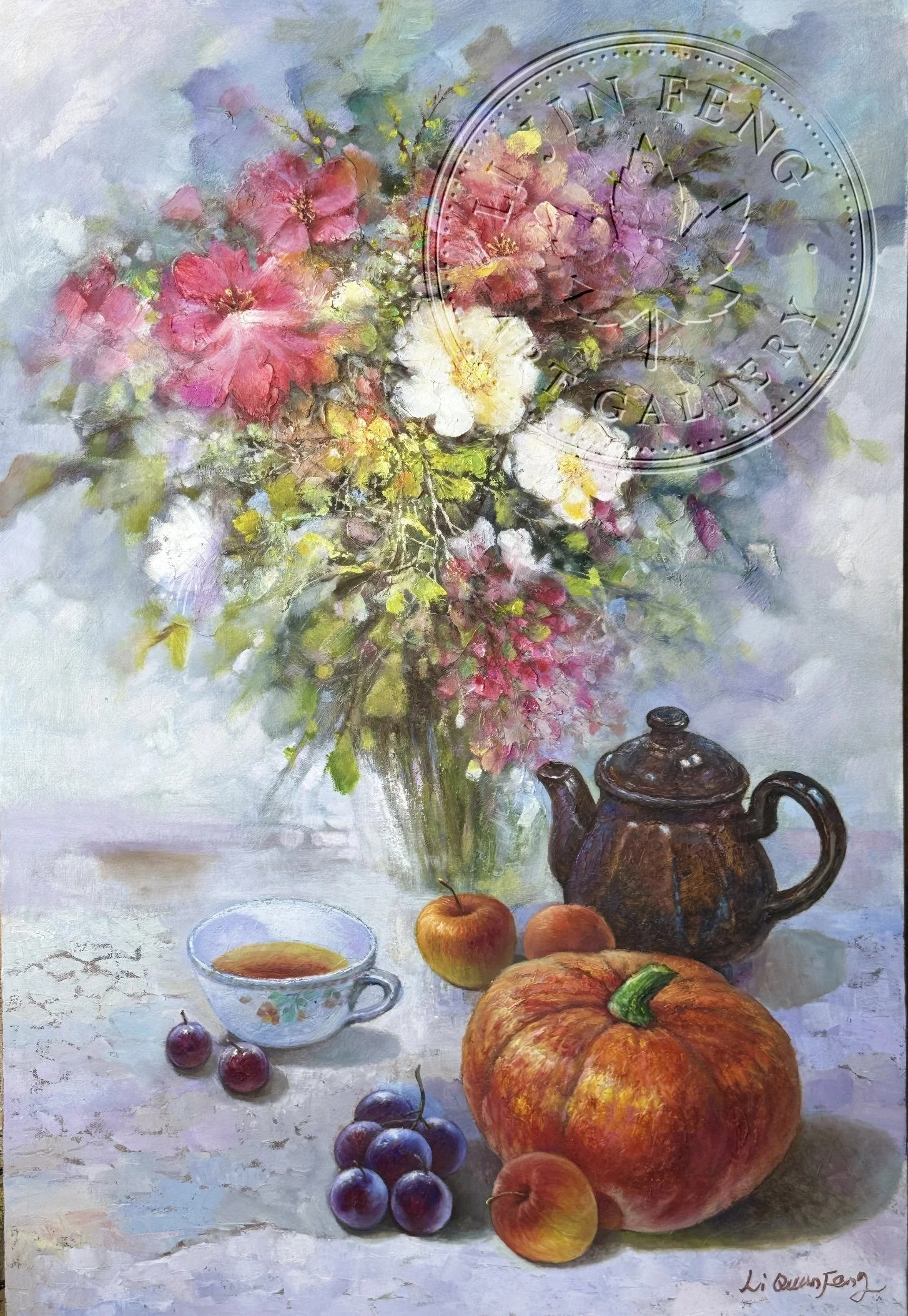
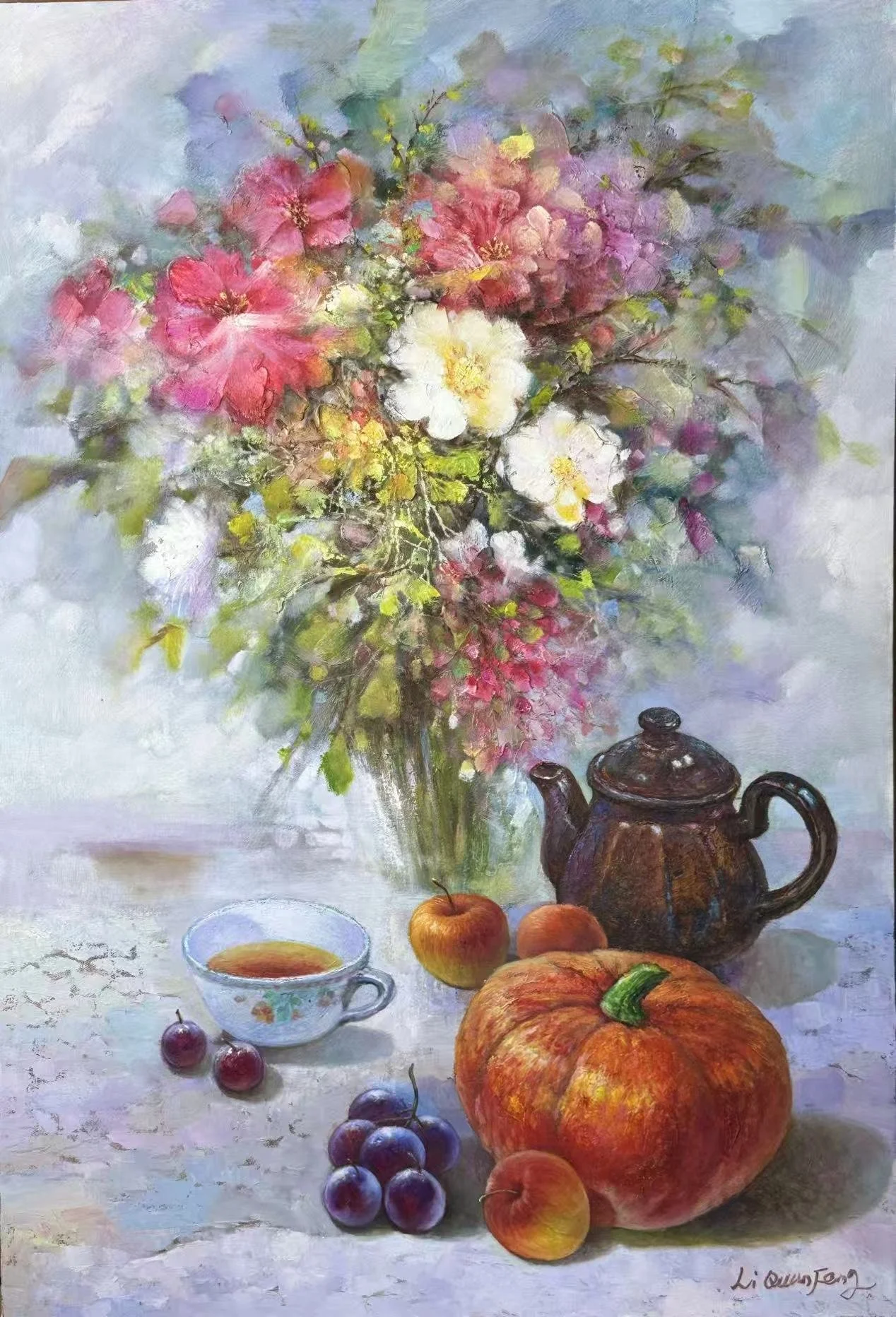
“如果说秋天有形状,那一定不是萧索的风与落叶,而是被光与烟火共同托住的柔软——是花未尽、果正熟、茶尚温的那一刻。画面在静物与时序之间展开:自然的季节,被生活的温度悄然接住;物的陈设,生出人的心性。这一幅“秋实”,并非描摹一束花、一只壶,而是将暮秋的暖光、家的爱意与东方审美中的“和”,轻轻引入画布之上。”
72X105cm
"If autumn had a shape, it would not be the bleak wind or falling leaves, but the softness held by light and warmth—a moment of lingering flowers, ripe fruits, and warm tea. The scene unfolds between still life and time, where nature meets the warmth of life. 'Autumn Harvest' does not merely depict objects, but subtly brings late autumn’s glow, the tenderness of home, and Eastern harmony onto the canvas."
画作展示
粉红如霞的花瓣裹着软金的花蕊,米白的花如浸了月光的云,枝蔓间坠着细碎的紫,沾着秋日未褪的暖——这已不是瓶中花,而是将暮秋的晴光揉碎,团成一捧鲜活的软。笔触轻盈,色彩润泽,如江南人家窗棂外的薄雾,裹着花的丰腴、叶的嫩绿,连玻璃花瓶都被渗透,泛着水色的温和。紫砂茶壶敛着深褐光泽,是中式最沉的稳重,如古画里的镇纸玉,压住秋光的轻扬。南瓜卧于一隅,橙红夹裹焦糖色的暖意,是秋天的底色;苹果的黄、李子的紫,如撒在素笺上的星点,连杯中的浅茶都泛着琥珀的光晕——这便是“秋实”,引入烟火气息,谱作成秋天的诗。
中国人向来讲风水,也讲心性。花是“生气”,簇簇开放,凝聚春秋之气;果是“丰稔”,圆润饱满,蕴合“圆满”之意;茶壶是“静气”,敛着烟火的温,让满室的活色沉稳下来。软花、润色、沉器,如同太极图里的阴阳,热烈却又不失安然——这是中式美学里的“和”,将自然的秋、生活的暖,映入一幅画里。
画笔铺色如烟,却落意至实:秋天从不是萧瑟的,而是花的柔、果的甜、茶的馥,裹成一怀柔软与温暖。画中没有风,却有它自带的意境——生活可以被画成诗,美得柔暖又不失安然。
Introduction
Petals blushing like morning clouds cradle soft golden stamens, while ivory flowers resemble moonlit clouds. Between the branches hang delicate hints of purple, touched by the lingering warmth of autumn—this is no longer a bouquet in a vase, but a capture of late autumn sunlight, folded into a bundle of vibrant softness. The brushwork is light, the colours luminous, like mist drifting outside a Jiangnan window, wrapping the fullness of flowers and the tender green of leaves, even seeping into the glass vase, radiating gentle warmth. The Yixing teapot holds deep brown luster, exuding calm weight like an inkstone or jade paperweight in a classical painting, anchoring the airy autumn light. A pumpkin rests in a corner, orange-red tinged with caramel warmth, forming autumn’s base tone; the yellow of apples and the purple of plums scatter like starlight on plain paper, even the tea in the cup glows with amber—this is 'Autumn Harvest,' infused with the everyday warmth of life, composed into a poem of autumn.
In Chinese tradition, both feng shui and human disposition matter. Flowers carry 'life force,' blooming in clusters to gather seasonal energy; fruits symbolize 'abundance,' round and full, embodying completeness; the teapot conveys 'tranquility,' containing the warmth of daily life, calming the vibrant colors of the room. Soft petals, luminous hues, grounded vessels—like yin and yang in a Taiji diagram—express energy yet remain serene. This is the 'harmony' of Chinese aesthetics, merging nature’s autumn and life’s warmth into a single painting.
The brush scatters color like smoke, yet the meaning remains tangible: autumn is never bleak, but tender in flowers, sweet in fruits, fragrant in tea, wrapped in softness and warmth. There is no wind in the painting, yet the scene carries its own atmosphere—life itself can be rendered into poetry, beautiful, gentle, and composed."