泉咏青嶂
Springs Singing Amid Verdant Peaks
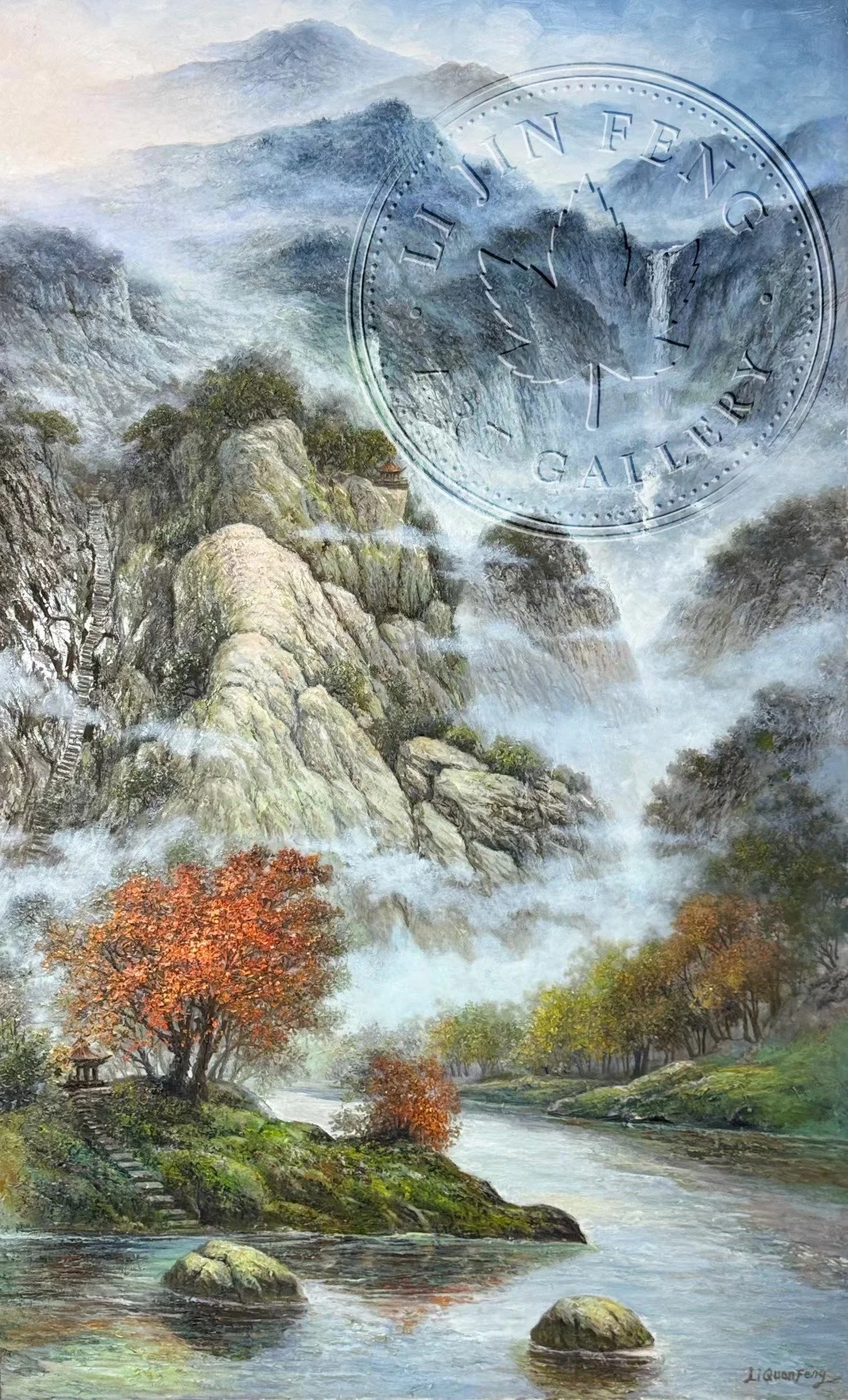
“晨雾缓缓在群峰间流淌,飞瀑自高处倾落,将静默的山体轻轻唤醒。层叠的山峦、流动的雾气与蜿蜒的水势,在画布上织成一幅静谧而深远的山水画卷。这里的山河不只是远观的景致,而是一种可感、可行、可体悟的空间,让人在云水之间,听见自然的呼吸,感受时间的缓缓流淌。”
Morning mist slowly drifts among the peaks, while waterfalls cascade from the heights, gently awakening the silent mountains. Layered ridges, flowing mist, and winding waters weave together on the canvas into a tranquil and profound landscape. Here, the mountains and rivers are not merely vistas to behold from afar, but a space to sense, traverse, and experience—where one can hear the breath of nature and feel the slow passage of time amidst clouds and waters.
90X150 cm
画作介绍
晨雾在群峰之间缓缓流动,山势因此显得愈发深远。飞瀑自高处倾落,隐现于云岚之中,如一线银白,将静默的山体唤醒。画面以青灰与淡蓝为基调,层层叠叠地铺陈出山河的纵深,云雾不再只是背景的点缀,而成为连接天地的媒介,使远山的轮廓在虚实之间游移,呈现出含蓄而辽阔的空间感。
中景的山石以写实笔触塑造,纹理清晰而克制,既保留了自然的粗粝,也显出岁月沉积的安定力量。林木沿山势展开,色调由冷转暖,在雾气与山影之间形成柔和的过渡。隐约可见的观景亭与蜿蜒石路并不喧宾夺主,却在山水之间留下人的尺度——它们提示着一种“可抵达”的存在,使这片山河不再只是远观的对象,而是可以行走、停驻与体悟的空间。
画面的节奏并不依赖强烈的对比,而是在缓慢的流动中展开。飞瀑与江水形成连续的水势,水的走向牵引着视线向深处延伸;山体与林木则稳托住画面的重心,使动与静在相互依存中取得平衡。红枫作为画面中最鲜明的色彩,被谨慎地安置在近景之中,它既打破了整体的冷静,又未使画面失衡,仿佛在提醒观者:自然的生机,往往藏于克制之中。
在这里,山水并非被塑造成宏大的象征,而是以一种接近生活的方式呈现其精神气质。正似“咫尺山林,多方胜景”的山水哲思。色彩的递进、空间的铺陈、细节的取舍,都指向一种东方审美中熟悉的秩序感——不追求瞬间的震撼,而强调时间的沉淀与观看的耐心。画面所传达的,并非单一的壮丽或抒情,而是一种在山河之中缓缓展开的情绪:清润、安定,却始终保持流动。
当视线在云、山、水、林之间往复游走,观者并非只是观看一处风景,而是在画面的引导下进入一种节奏之中。泉瀑的声响仿佛在画外回荡,雾气的流动似乎仍在继续。这幅作品最终呈现的,不是对自然的描摹本身,而是一种关于山河如何被感知、被亲近的方式——在静观之中,体会天地的广阔;在行想之间,安放人的位置。 .
Introduction
Morning mist drifts slowly between the peaks, making the mountains appear ever more profound. Waterfalls cascade from great heights, partially hidden in the clouds and mist, their silver threads awakening the silent slopes. The canvas is dominated by shades of blue-grey and pale blue, layered to convey the depth of the landscape. Here, mist is no longer mere background ornamentation, but a medium connecting heaven and earth, causing the distant ridges to hover between clarity and obscurity, creating a space both subtle and expansive.
The mid-ground rocks are rendered with realistic brushwork, their textures restrained yet clear—retaining nature’s ruggedness while conveying the stable weight of accumulated time. Forests unfurl along the slopes, transitioning from cool to warm tones, forming a gentle bridge between mist and shadow. A pavilion and winding stone path appear subtly, not drawing attention but giving the landscape a human scale—reminding viewers that this is a space one can traverse, pause in, and experience, rather than a distant spectacle to merely observe.
The composition’s rhythm relies not on stark contrasts but on gentle flow. Waterfalls and rivers guide the eye inward, extending the scene into depth, while mountains and forests anchor the frame, balancing motion and stillness. Red maples, the brightest colors in the painting, are carefully positioned in the foreground—breaking the overall coolness without disrupting harmony, subtly suggesting that life and vitality often reside in restraint.
Here, the landscape is not monumentalized, but presented with a near-life sensibility, embodying its spirit in a quiet, approachable manner—echoing the idea of “within a short distance, many wondrous views.” The progression of color, spatial arrangement, and selective detailing all reflect an Eastern aesthetic order: not seeking immediate drama, but emphasizing the accumulation of time and the patience of observation. What the painting conveys is not singular grandeur or lyricism, but a slow-unfolding emotion within the mountains and rivers: clarity, stability, yet constantly in motion.
As the viewer’s gaze moves among clouds, mountains, water, and forests, they are not merely observing a scene, but entering a rhythm guided by the painting. The sound of waterfalls seems to echo beyond the canvas, and the flow of mist appears to continue. Ultimately, the work presents not a mere depiction of nature, but a meditation on how landscapes are perceived and approached—finding vastness in quiet observation, and placing the human presence within it.