色韵春日
Spring’s Colour Resonance
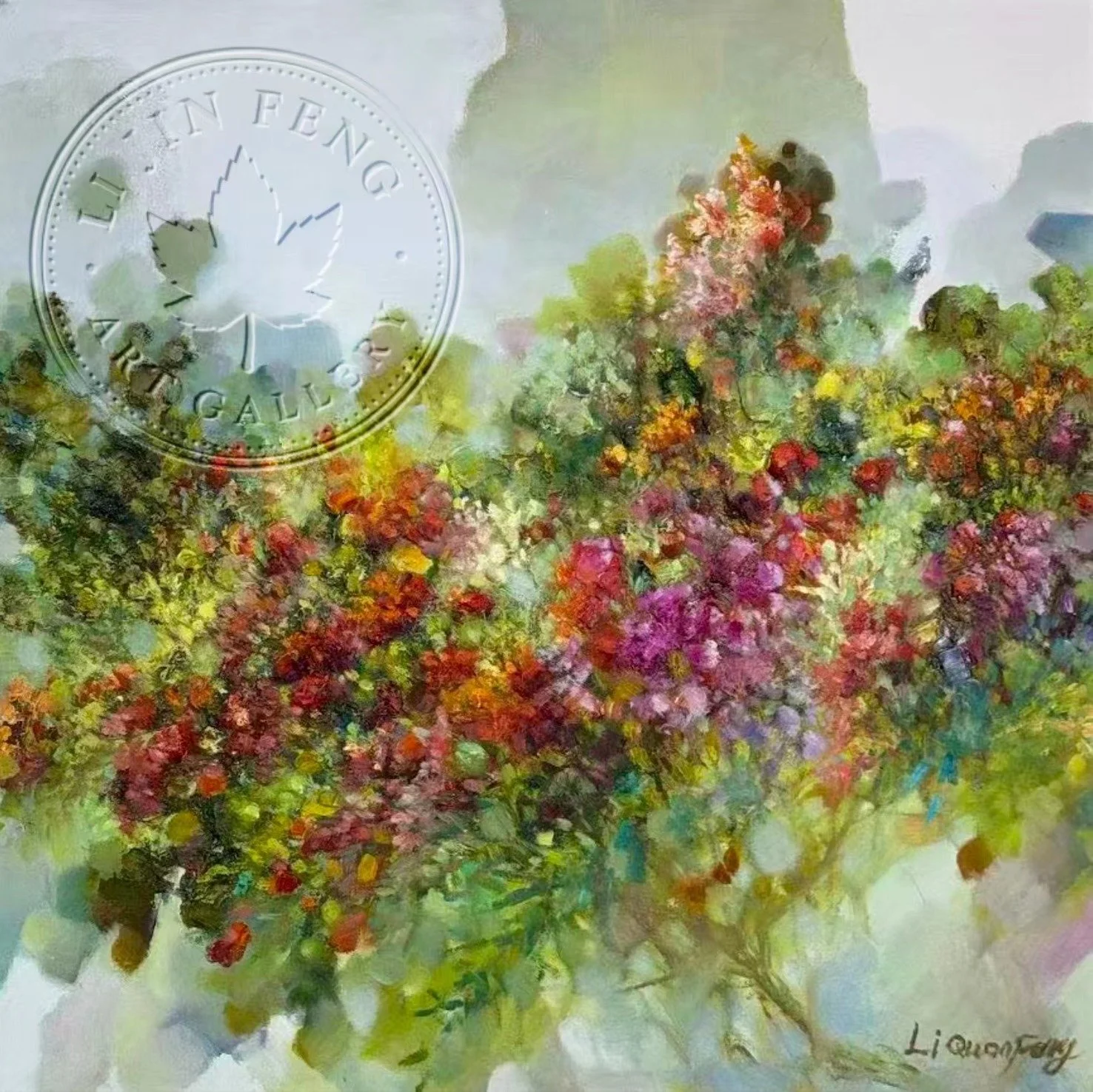
“色彩在画布上随春风起舞,繁花的欢歌便悄然苏醒——这一刻,春天不在遥远的远方,而是在近在咫尺的地方绽放。”
75X75 cm
画作介绍
印象派的灵动笔触邂逅东方写意的朦胧意境,这幅花卉油画便捕捉了春日最鲜活的气息。斑斓色块交织、松散肌理堆叠,仿佛将满园春色的涌动与生机凝结在画布上;春风轻拂花丛的欢腾与生气,也在这一方色彩中悄然绽放。
色彩是这幅作品的灵魂,亦是春日情绪的承载体。画家以绿为底,深浅交错的草绿与墨绿铺陈出枝叶的繁茂,宛如春日大地舒展的脉络;红的热烈、紫的烂漫、黄的明媚揉碎在绿意之间,仿佛桃花、紫藤与迎春在春风中簇拥绽放。冷暖色调的碰撞模糊了具象的边界,却让春日繁花的层次感与鲜活感跃然画面。背景以浅灰蓝与淡青晕染成朦胧的天际,如春日清晨未散的薄雾,为浓烈的花簇留出呼吸的空间感,也为这片春色增添了几分空灵的诗意。
笔触的写意性,将“春风得意”的欢快氛围推向极致。画家并未执着于花瓣轮廓或叶片纹理,而是以随性的点染和色块的糅合,捕捉春风拂过花丛时枝叶摇曳、花瓣纷飞的动态感。那些看似杂乱却浑然天成的色彩堆叠,正如春日繁花在风中舒展、欢歌——不是静态的绽放,而是生命在春光中肆意跃动的雀跃。这种“不似之似” 的表现手法,契合东方美学中“意在笔先” 的理念,将春日的气韵而非形骸,精准地定格在画布之上。
在这幅作品中,春天不再是远处的风景,而是可触可感的情绪。画家以印象派的色彩语言为骨,以东方写意的审美为魂,让繁花与春风的交融在具象的色彩与笔触中鲜活呈现。观者仿佛在斑斓的色块间听见春日的欢歌,感受到轻拂面颊的春风温柔。艺术不在于复刻自然,而在于以独特的美学,将自然的诗意与生命的欢腾凝固在画布之上,永恒绽放。
Introduction
Impressionist brushwork meets the hazy lyricism of Eastern freehand painting in this floral oil painting, capturing the freshest breath of spring. Vibrant color blocks intertwine and textures build loosely, as if condensing the vitality and movement of a full garden onto the canvas. The joyful sway of flowers in the spring breeze quietly blooms within this vibrant palette.
Color is the soul of the work, carrying the emotions of spring. The artist lays a green foundation, layering pale and deep greens to suggest lush foliage, like the veins of a springtime landscape. Warm reds, vivid purples, and bright yellows mingle within the greens, evoking blossoming peach, wisteria, and forsythia embraced by the spring wind. The interplay of warm and cool tones softens the boundaries of representation, while bringing the layers and vitality of spring flowers vividly to life. The background, washed in soft gray-blue and pale cyan, evokes the misty sky of an early spring morning, providing breathing space for the dense blossoms and a poetic sense of ethereality.
The expressive brushwork amplifies the joyous energy of spring. Rather than defining petals or leaf textures, the artist captures the dynamic movement of branches swaying and blossoms fluttering through spontaneous dabs and blended color blocks. What may appear as disorder is in fact a natural harmony—flowers unfolding and singing in the wind, alive in the spring sunlight. This technique of “semblance without form” aligns with the Eastern aesthetic principle of “meaning preceding the brush”, rendering the essence of spring rather than its literal appearance.
Here, spring is no longer a distant landscape but a tangible, perceptible emotion. The artist’s use of Impressionist color forms the structure, while Eastern freehand aesthetics provide the spirit, allowing the interplay of blossoms and breeze to come alive through brush and hue. Viewers seem to hear the songs of spring within the vibrant colors and feel the gentle caress of the wind. Art is not a mere replication of nature; it is the crystallization of its poetic vitality, preserving the joy and rhythm of life on canvas for eternity.