荷风凝香
“Fragrance of the Lotus Wind”
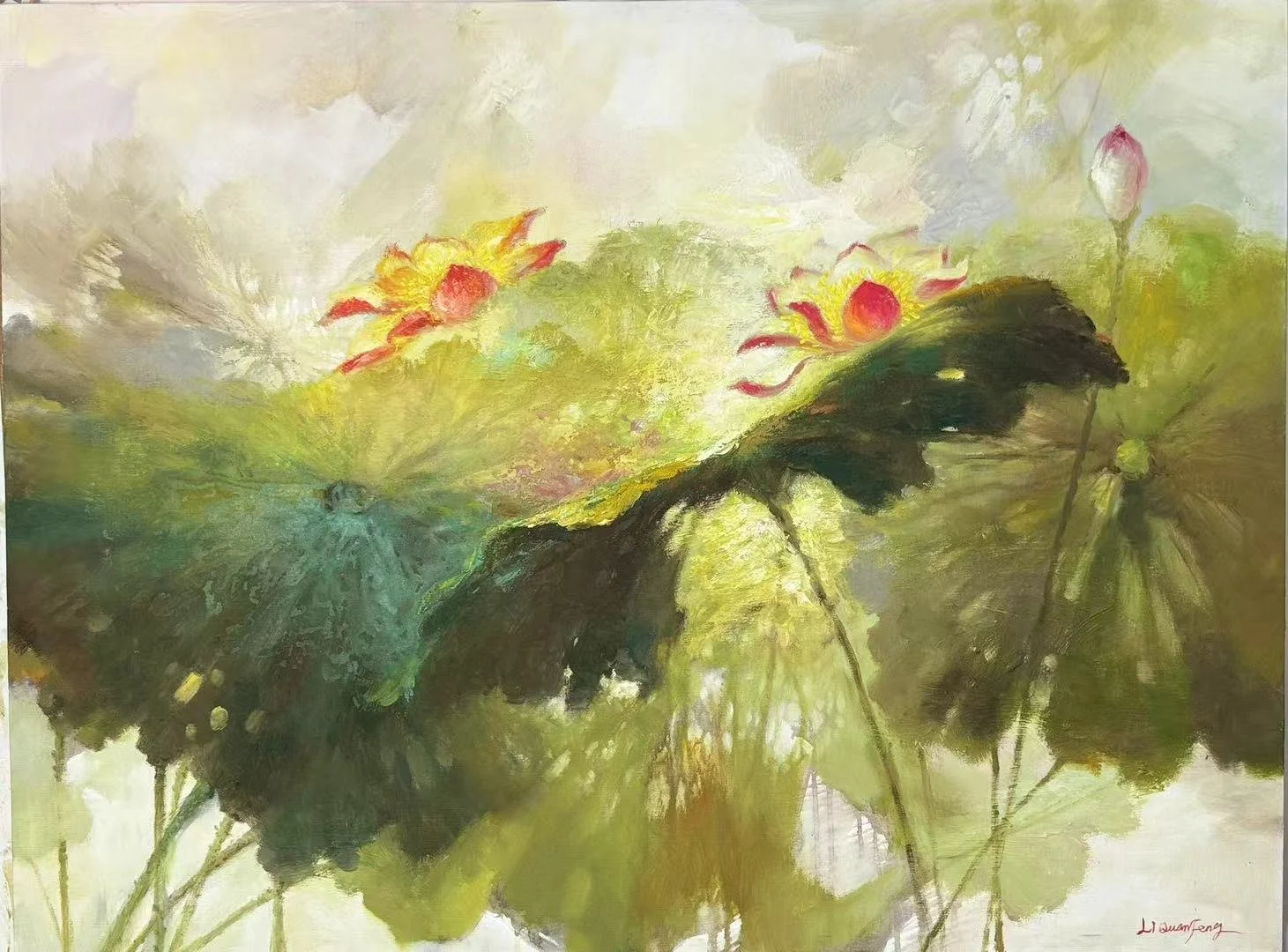
画作展示
暖灰色的背景如夏日薄雾般缓缓漫开,荷花从氤氲的底色中舒展身姿,悄然成为盛夏最动人的风景。这幅意象荷花油画,以写意的笔触与柔润的色彩,将荷花的清雅与夏日的温度融入画面表达;在具象与意象的交织之间,勾勒出荷风轻拂时的浪漫气息,以及流淌于日常生活中的温柔幸福。
从视觉美学的层面来看,色彩的铺陈构成了作品的核心语言。暖灰色并非单一的背景,而是富有温度与层次的肌理场域:浅灰的朦胧与深灰的厚度相互交织,如被柔化的夏日晨光,既托举出荷花的明艳,又为画面奠定了温润而克制的基调。荷花的色彩成为画面的点睛所在。艳红的花蕊如微微跃动的火焰,明黄的花瓣边缘晕染着暖调光泽,与墨绿、翠绿的荷叶形成鲜明的冷暖对比。荷叶的笔触奔放而厚重,色块层层叠加,模拟出叶面的肌理与夏风掠过时的摇曳;而荷花的笔触则更为细腻轻盈,花瓣在虚实之间舒展、叠映,使荷花的“纯洁”与“热烈”在画面中形成张力与呼应。这种色彩的对照与融合,打破了对自然形态的写实依附,以意象化的方式赋予荷花以可感的温度与情绪,也正是色彩美学中 “虚实相生”理念的生动呈现。
笔触的节奏,为作品注入了鲜明的动态美学。画家并未执着于荷花与荷叶的纤微刻画,而是以“写”代“描”:荷叶以大笔触的厚涂与扫抹铺陈,墨绿与黄绿在色彩的交融中起伏流动,仿佛能听见夏风掠过荷塘时的簌簌声响;荷花则以更为细腻的点染与轻描塑形,花瓣边缘若隐若现,花蕊以浓色点出,使花朵在写意的荷叶之间自然挺立,显得清雅而不失生机。背景的暖灰色以晕染的方式铺展开来,与荷花、荷叶的实笔触形成“虚”与“实”的对话。这种笔触层次的对照,使静态的画面生出流动的节律,恰如夏日荷塘里轻起的微风,携着淡淡荷香缓缓拂过。正是在这样的笔意流转之中,作品达成了“笔意传神”的境界——将荷花盛放的热烈与姿态的清雅,一并藏入富有节奏的笔触之中。
在精神美学的层面,作品已然超越了对荷花形态的再现,转而成为情感与意绪的承载。荷花自古象征纯洁与高雅,画家以偏暖的色彩描绘其盛放,以暖灰的基调缓缓铺陈氛围,实则将荷花所蕴含的“纯洁”与“热情”,转化为贴近日常的欢愉与安然。画中的荷花不再是孤立的自然物象,而是一种生活情感的隐喻——如夏日清风拂面,如亲友相聚的温暖时刻,亦如内心安定时悄然生出的喜悦。那些属于盛夏的柔软与欢欣,被悄然凝聚于这一方荷塘之中。意象油画的魅力,正在于以“象”寄“意”。画家借荷花之形,抒写夏日之情,使观者在色彩与笔触的流转间,触及生活深处的温度与诗意。这不仅是对现实情感的艺术升华,亦是美学意义上“以景抒情”的深层呈现。
暖灰为底,荷香成韵,作品以意象化的表达,将荷花的纯洁与盛夏的温度融入同一视觉语境之中。它所呈现的,并非自然形态的复刻,而是借由色彩的层次与笔触的节奏,捕捉潜藏于日常与自然之间的柔软情绪。荷风的暖意因此停驻于画布之上,也在观者的凝视中缓缓展开。
INTRODUCTION
A warm grey background spreads across the canvas like the gentle mist of an early summer morning. At the same time, lotus flowers rise gracefully from the hazy depths, quietly becoming the most captivating scenery of midsummer. In this impressionistic lotus painting, the artist blends expressive brushwork with soft, flowing color to convey the lotus’s elegance and the warmth of summer. Between figuration and abstraction, the painting evokes the romantic air of a gentle lotus breeze and the quiet joys that flow through everyday life.
From a visual aesthetic perspective, the layering of color forms the core language of the work. The warm gray is not a flat backdrop but a textured field imbued with depth and warmth: pale gray mists intertwine with richer dark grays, softened like the morning light of summer, simultaneously supporting the lotus's brightness and establishing a subtle, restrained tonal foundation. The lotus colors act as the focal point. Scarlet stamens flicker like tiny flames, while the edges of golden-yellow petals glow with a warm radiance, contrasting vividly with the dark and bright greens of the leaves. Broad, expressive brushstrokes and layered color blocks simulate the texture of leaves and the sway of summer wind, while the lotus petals are rendered delicately, unfolding and overlapping to create a visual tension between purity and vibrancy. This interplay of contrast and harmony transcends realistic depiction, allowing the lotus to convey palpable warmth and emotion, exemplifying the aesthetic principle of “balance between void and substance.”
The rhythm of the brushstrokes further injects dynamic energy into the painting. The artist does not cling to minute details of petals or leaves but chooses to “paint with intent rather than outline.” Lotus leaves are laid out with sweeping, thick strokes, the dark and light greens flowing and undulating as if one could hear the rustle of wind over the pond. The lotus flowers, by contrast, are built with delicate layering and subtle dabbing, their edges softly diffused, with concentrated touches on the stamens drawing the eye and allowing the flowers to stand gracefully amidst the expressive leaves. The warm gray background, softly blended, creates a dialogue of “void and substance” with the more tangible brushwork of the lotus and leaves. Through these layered strokes, the still canvas gains a rhythmic motion, like a light summer breeze sweeping across the lotus pond, carrying the faint fragrance of the flowers. In this fluent brushwork, the work achieves a “spirit through brush” quality—capturing both the exuberance of blooming lotus and the elegance of their form.
On a conceptual and emotional level, the painting moves beyond mere representation of lotus flowers, becoming a vessel for feeling and mood. Traditionally symbols of purity and elegance, the artist renders the blooming lotus with warm tones on a muted gray ground, transforming their inherent “purity” and “passion” into a sense of everyday joy and tranquility. The lotuses are no longer isolated objects of nature but metaphors for life’s gentle moments: the caress of a summer breeze, the warmth of time spent with loved ones, or the quiet joy that rises in the heart. The softness and delight of midsummer are subtly concentrated in this pond, and the beauty of impressionistic painting lies in conveying “meaning through image.” Using the lotus as a medium, the artist expresses the spirit of summer, allowing viewers to feel the warmth and poetry of life through the interplay of color and brushwork. This is not only an artistic elevation of real emotion but also a profound example of the aesthetic principle of expressing sentiment through scenery.
With warm gray as its foundation and the fragrance of lotus as its melody, the painting uses impressionistic expression to fuse the purity of the lotus with the warmth of midsummer in a single visual experience. It does not seek to replicate natural form; instead, through layered color and rhythmic brushwork, it captures the gentle emotions hidden in both daily life and nature. The warmth of the lotus breeze thus lingers on the canvas and slowly unfolds in the gaze of the viewer.
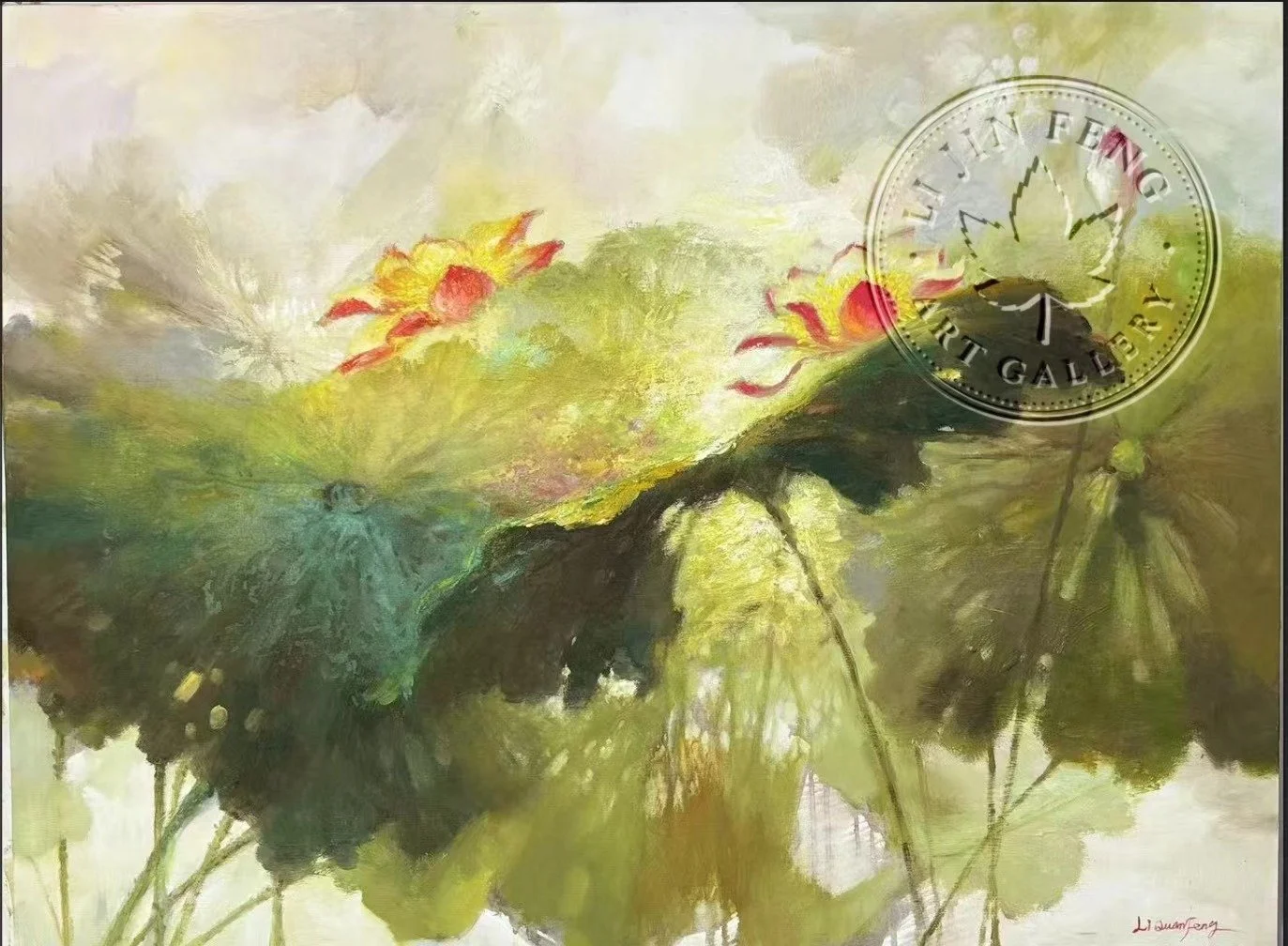
90 × 120 cm